On March 20th, something shifts.
Not dramatically — the PNW rarely does anything dramatically. It’s quieter than that. The light starts staying a little longer at the edges of the day. The rain smells different. Somewhere in the wet dark under the firs, things are moving that have been still since October. You might not notice it if you weren’t paying attention. But if you’ve been paying attention — if you’ve been watching the darkness shorten by minutes since the winter solstice, tracking the slow return of light the way our ancestors did — you feel it like a held breath finally released.
The spring equinox has arrived. And in the Pacific Northwest, it is worth celebrating.
What Is Ostara — and Where Does It Come From?
Ostara is the modern pagan name for the spring equinox sabbat, one of eight points on the Wheel of the Year. The name comes from Ēostre (also spelled Eostre) — a Germanic goddess of the dawn and spring, first documented by the 8th-century English monk Bede in his work De Temporum Ratione (The Reckoning of Time). Her name is linguistically rooted in the Proto-Germanic word for “to shine” — the same root that gives us the word east, where the sun rises, and eventually, Easter.
It’s worth being honest here: the historical record for Eostre is thin. Bede mentions her, and there are over 150 Romano-Germanic votive inscriptions to related matron goddesses discovered in Germany, but much of what modern paganism associates with Ostara — the hare, the eggs, the specific rituals — is a living tradition built from fragments, folklore, and genuine spiritual practice rather than an unbroken ancient lineage. That doesn’t make it less real or less meaningful. The old stories have always been rebuilt, retold, and re-rooted in new soil. That’s how living traditions work.
In the Norse tradition, the spring season was honored through Sigurblót — a blót (offering ritual) of victory, calling upon Freyr, Freyja, and the earth itself to mark the moment summer wins over winter. The Druidic tradition calls this threshold Alban Eilir, meaning “Light of the Earth” — a name that captures something essential about what this moment is: the tipping point when light begins to outweigh darkness, when the earth remembers what warmth feels like.
The Turning: From the Dark Half to the Light
The Wheel of the Year turns on two axes: the solstices, which mark the extremes of light and dark, and the equinoxes, which mark the balance points between them. The spring equinox is the moment when day and night stand equal — and then, crucially, the light wins. From this day forward until the autumn equinox in September, every day will be longer than the night.
That matters more than it might seem. For our ancestors, the long dark months of winter were genuinely hard — cold, hungry, and isolating. The return of light wasn’t a metaphor. It was survival. The gradual lengthening of days beginning at Yule was a promise; Ostara is the moment that promise is kept. The balance tips. The world remembers how to grow.
For us, living lives that don’t depend on the harvest in the same way, the meaning has shifted — but it hasn’t disappeared. There is something genuinely resonant about marking the transition from the darker, more inward season to the lighter, more outward one. Winter asks us to rest, to go within, to tend the inner fire. Spring asks us to bring what we’ve been incubating back out into the world. The seeds we plant now — literal or metaphorical — are the ones that will grow.
What Ostara Looks Like in the Pacific Northwest
The PNW doesn’t do spring the way other places do. There are no dramatic overnight explosions of blossom. Instead, spring arrives here the way it does everything — slowly, quietly, persistently, and smelling like rain.
Here’s what to look for right now, in the wet woods and along the trails of western Washington and Oregon:
Skunk cabbage (Lysichiton americanus)
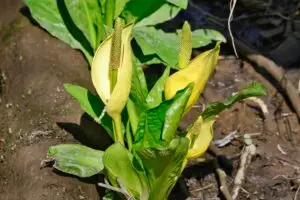
— The first and most unmistakable herald of PNW spring. Those bold yellow spathes rising from swampy ground and stream edges are one of the first flowers to bloom each year, sometimes as early as late February. Follow your nose (or brace yourself) and you’ll find them in any wet, boggy area. In the old plant medicine traditions of Pacific Northwest Indigenous peoples, skunk cabbage was used as a food source and medicine. It’s an elder of early spring — unglamorous, pungent, and absolutely reliable.
Trillium (Trillium ovatum)
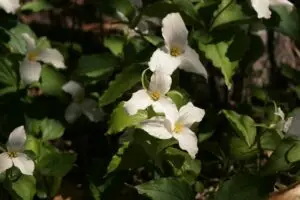
— The three-petaled white trillium is one of the most beloved wildflowers in the PNW, blooming in the moist shaded understory beneath Douglas fir and western hemlock. They’re beginning to emerge now in lowland forests. Never pick them — trilliums take years to establish and removing the flower can kill the plant. Just find them, sit with them, and appreciate the quiet magic of something so fragile returning year after year.
Salmonberry (Rubus spectabilis)
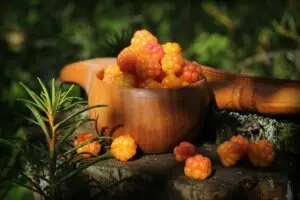
—Those vivid magenta-pink flowers on riverbanks and forest edges are salmonberry, and right now they’re attracting the first rufous hummingbirds returning from their winter migration. If you see a flash of copper-red darting between pink blossoms on a misty morning, that’s spring arriving in the most PNW way possible.
Indian plum (Oemleria cerasiformis)
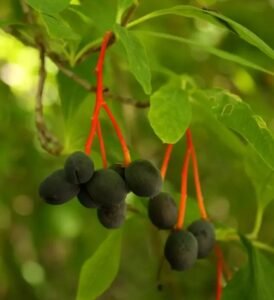
—One of the very first shrubs to leaf out in the PNW, Indian plum’s small white flowers often appear as early as February. By now it’s in full early-spring form — a reliable signal that the land is waking up.
This is the season to be outside, even in the rain — especially in the rain. The forest in March has a quality of newness to it that doesn’t last long. The mosses are impossibly green. The air smells like earth and water and something being born.
A Simple Ostara Practice for Real Life
You don’t need a full ritual setup, a coven, or a perfectly curated altar to mark the equinox. Here’s how I tend to honor it — all of it achievable after a night shift, with limited time and a real-life kitchen.
Light a candle at dawn or dusk. The equinox is a threshold — a moment of balance between light and dark. Lighting a candle at the threshold of the day (sunrise or sunset) is one of the oldest and simplest acts of marking a sacred moment. Use beeswax if you have it. Set an intention for what you’re calling in for the lighter half of the year.
Plant something. Even a pot of herbs on a windowsill counts. Rosemary, lavender, or thyme are all appropriate for spring and all useful in the kitchen and in craft work. The act of pressing a seed into soil and trusting it to grow is itself a ritual of intention — one humans have been performing at this time of year for as long as we’ve been planting things.
Do a threshold clean. Spring cleaning is not just a practical tradition — it’s a magical one. Sweeping out the corners, washing windows, clearing out what accumulated over the dark months: this is the domestic version of the land’s own renewal. As you clean, think about what you’re releasing from the winter season — what heaviness, what old patterns, what finished things are ready to be swept out with the dust.
Take a walk and pay attention. Go find the skunk cabbage. Look for trilliums. Notice what’s changed since you last walked the same trail. The land is keeping the festival whether we participate or not — but there’s something about consciously witnessing it that makes it feel like a conversation rather than a backdrop.
A PNW Ostara Altar
If you keep an altar and want to dress it for the equinox, here’s what I’d reach for from the PNW landscape and pantry:
🌿 Fresh cedar or fir sprigs — the land itself, brought inside
🕯️ A beeswax candle in gold or pale yellow — for the returning sun
🥚 An egg — the oldest symbol of potential and new life
🌸 The first spring flowers you can find — even grocery store daffodils count
🪨 Seeds for planting — set your intentions alongside them
🌊 A small bowl of water — for the rain, for the rivers running full, for the Pacific
The Promise the Light Keeps
There’s a Norse tradition called Sigurblót — the “blót of victory” — in which the coming of spring is understood as summer winning over winter. I love that framing. Not spring as a gentle awakening, but as a victory. The light fought for those minutes, day by day, since the darkest point of December. And now it has won.
There’s something worth carrying into our own lives in that. Whatever you’ve been holding through the dark months — the weariness, the grief, the long nights, the things that felt impossible in February — the wheel is turning. The balance tips toward light. You made it through the dark half of the year.
Now plant something. Open the windows. Light the candle. Let the light back in.
❖ Happy Ostara, from the misty, green, endlessly generous Pacific Northwest. 🌲🌙